
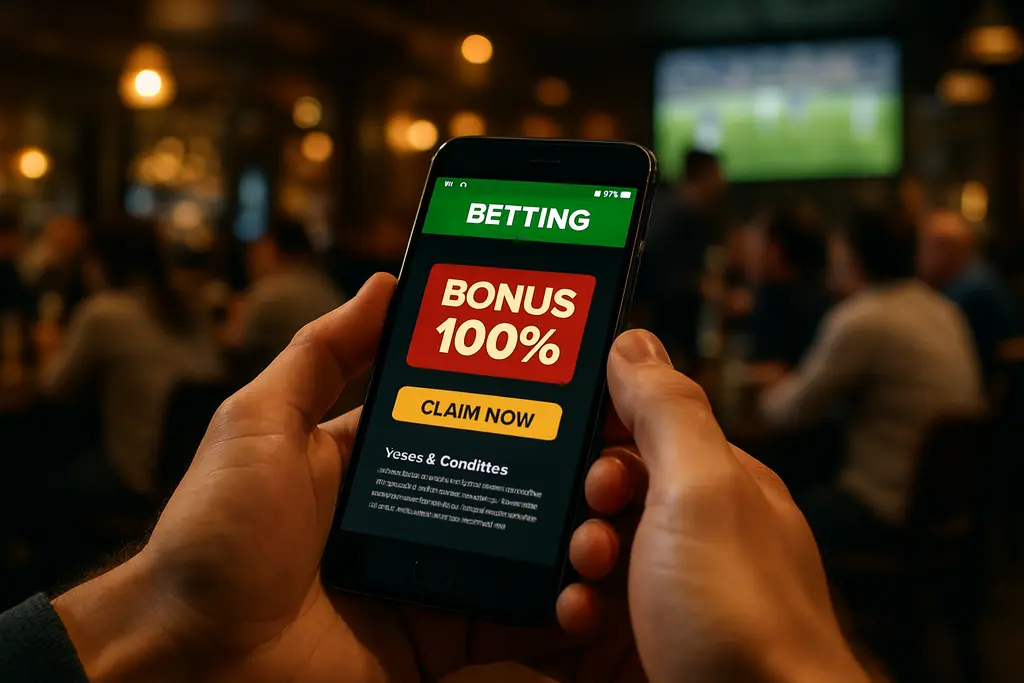
The case for bonus transparency is no longer merely a preference of careful players; it has become a point of legal scrutiny in disputes involving DraftKings and Golden Nugget. The cases described in the research do not prove that every challenged promotion was unlawful. They do, however, show how deposit matches, site credits, playthrough rules, and so-called no-sweat offers can create a wide gap between an advertisement and a player’s reasonable expectation.
A bonus is not a gift in the ordinary social sense. In regulated gambling, it is usually a conditional offer. The conditions may include a qualifying deposit, eligible wager types, a fixed claim period, withdrawal limits, game contribution rates, and a deadline. A prudent reader, like a prudent heroine in a drawing room full of flattering speeches, should listen less to the compliment and more to the obligation hidden beneath it.
Bonus Transparency And The DraftKings Cases
Bonus Transparency Questions Before Deposit
In December 2023, the Public Health Advocacy Institute filed a Massachusetts class-action lawsuit, Scanlon et al. v. DraftKings, on behalf of new customers allegedly misled by a DraftKings Sportsbook promotion described as a $1,000 Deposit Bonus, according to the PHAI filing notice. The plaintiffs alleged that customers had to deposit $5,000, wager $25,000 on qualifying bets within 90 days, and then receive non-withdrawable site credits rather than cash.
Those allegations matter because the headline number was not the whole economic bargain. If a player must place many times the advertised amount in qualifying wagers, the offer may expose that player to far more gambling activity than the advertisement first suggests. The narrow lesson for bonus transparency is plain: the cost of qualifying can be more significant than the advertised credit.
On February 17, 2026, a Massachusetts Superior Court judge rejected most of DraftKings’ motion for summary judgment, allowing the case to proceed toward class certification, discovery, and trial under Massachusetts consumer protection law. As of February 24, 2026, the court had concluded that triable issues of fact remained over whether the bonus advertisements sufficiently disclosed material conditions. That was not a final ruling that the plaintiffs had prevailed on every issue. It was a ruling that the record did not dispose of the dispute at that stage.
What The Pennsylvania Filing Added
On April 18, 2025, plaintiffs Kenneth Macek, Matthew Harner, Avi Setton, Lionel Alicea, and Robert Walker filed a class-action complaint in the Eastern District of Pennsylvania against DraftKings Inc., Crown PA Gaming doing business as DraftKings, and Golden Nugget Online Gaming LLC. A later company litigation disclosure described the Pennsylvania action, the challenged promotions, and the April 8, 2026 order granting in part and denying in part the motion to dismiss in Case No. 2:25-cv-03632, as reflected in the SEC litigation disclosure.
The contested Pennsylvania promotions included a Casino Deposit Match Promotion advertised as a 100% match up to $2,000, or $1,000 on Golden Nugget; a Risk-Free or No-Sweat Promotion; and the $1,000 Sportsbook Deposit Bonus Promotion. The complaint alleged that some advertisements did not disclose material terms clearly, including playthrough requirements and contribution rates by game type. The research notes one example in which blackjack allegedly contributed only 20% toward a wagering requirement.
Golden Nugget Online Gaming LLC was named together with DraftKings in the Pennsylvania matter because, according to the research supplied, GNOG has been a wholly owned subsidiary of DraftKings since May 2022, and the plaintiffs alleged that similar promotions were offered under both banners. The April 8, 2026 ruling dismissed some claims, including certain UTPCPL claims tied to the Casino Deposit Match and $1,000 Sportsbook Deposit for failure to show ascertainable loss, while allowing other claims, particularly those concerning Risk-Free or No-Sweat bets, to proceed.
How Bonus Terms Can Mislead Even Careful Players
Wagering, Contribution Rates, And Site Credits
Good bonus transparency is not achieved by placing a large number in the advertisement and a dense paragraph somewhere beneath it. A player needs to know what must be deposited, what must be wagered, which games count, how much each game contributes, when the period expires, and whether the reward can be withdrawn as cash. If a promotion pays only in site credits, then the player receives a further opportunity to wager, not a cash equivalent.
The Pennsylvania complaint’s alleged 10-times wagering condition for a Casino Deposit Match illustrates the arithmetic problem. A phrase such as 100% match may sound simple, yet the actual obligation may be tied to the combined total of deposit and bonus. A person depositing to qualify may then face a far larger wagering path than expected. This is not a moral criticism of all bonuses. It is a warning that offer design and user interface design can shape player behaviour in quiet but forceful ways.
Contribution rates deserve special suspicion. If blackjack counts at only 20%, a player who prefers blackjack may need far more actual wagering than a player first imagines. Slot play, table games, and sports wagers may not be treated alike. A well-presented promotion should make those differences visible before registration, before deposit, and again before opt-in.
No-Sweat Language And Consumer Expectations
The phrase Risk-Free or No-Sweat can soften a player’s sense of exposure, though the research concerns allegations rather than a final merits judgment. A cautious operator would treat such wording with restraint, since the ordinary customer may hear comfort where the terms impose limits. If the refund is a credit, if the qualifying bet must meet certain conditions, or if withdrawal is restricted, the phrase can become more persuasive than informative.
This is where bonus transparency becomes a safer-play issue, not only a contract issue. Excessive focus on the headline reward can encourage customers to deposit more than planned, chase qualification, or continue wagering after the entertainment budget has served its purpose. Players comparing market signals and promotional design may find related context in our analysis of online casino revenue and bonus signals. For related operator-market coverage in the same network, it’s worth visiting GClubGod for further insights.
Practical Protection Steps For Bonus Offers

A Pre-Deposit Reading Method
The safest bonus is not the one with the largest advertised amount. It is the one whose obligations you understand and can decline without regret. Before accepting a casino or sportsbook promotion, read the offer as if every sentence may cost money. If the material terms are absent, hard to find, or inconsistent across the ad, landing page, and account screen, that is a reason to pause.
- Find the true qualifying cost: identify the deposit amount, the required wager amount, and the deadline before funding the account.
- Check reward form: confirm whether the bonus is cash, site credit, bonus funds, or another non-withdrawable credit.
- Read game contribution rates: note whether table games, slots, live dealer games, or sports wagers count differently.
- Set a separate cap: never let a wagering requirement become a reason to exceed a pre-set entertainment budget.
- Keep records: save the ad, full terms, timestamp, and account messages if you choose to opt in.
Why Screenshots And Time Limits Matter
One point from the Massachusetts record is especially instructive: the judge found that DraftKings’ submissions, including recreations of what was shown, did not resolve whether the actual notices provided were adequate. For players, that means records matter. Screenshots cannot solve every dispute, but they may preserve what was presented at the moment of decision.
Time limits also deserve close attention. A 90-day period may appear generous until a player calculates the qualifying wagers required. If reaching the requirement would demand betting frequency or bet size that feels uncomfortable, the rational act is to decline. Entertainment should not require an escalation plan.
Responsible gambling tools should be set before any bonus is accepted. Deposit limits, loss limits, time reminders, cool-off periods, and self-exclusion options are not signs of failure. They are safeguards against precisely the pressure that promotional targets may create. If a bonus offer makes those tools feel inconvenient, the offer is doing too much work on the player’s emotions.
DraftKings And Golden Nugget Bonus Transparency
As of September 2, 2026, the research supplied shows legal scrutiny over DraftKings and Golden Nugget bonus promotions in Massachusetts and Pennsylvania, with some claims dismissed, some allowed to proceed, and no final merits ruling stated here resolving every allegation. That mixed procedural posture calls for care. It would be wrong to treat the allegations as proven in full, just as it would be unwise to ignore the consumer-protection questions that courts allowed to continue.
The lasting value of these cases lies in their warning. Bonus transparency concerns arise when the advertisement speaks in large type and the obligation speaks in small type. Players should not need legal training to understand whether a promotion requires thousands in qualifying wagers, whether credits can be withdrawn, or whether a chosen game barely counts toward completion. Operators that want trust should make those points clear before the deposit button, not after disappointment has set in.
Leave a Reply