

prediction market protections moved from a side discussion to a front-porch issue after the National Council on Problem Gambling issued its September 22, 2026 statement on event-contract risk. The plain idea is this: if a product lets a person stake money on uncertain outcomes, the consumer needs guardrails, whether the label on the jar says trading, forecasting, or gambling.
I have long believed a bankroll should be treated like a hired mule: useful, limited, and not to be ridden into the ground. That view fits this debate. Prediction markets may look different from blackjack or roulette, but the user experience can still include fast decisions, repeat transactions, emotional chasing, and poor risk judgment. The NCPG stated that prediction markets expose consumers to many of the same risks and harms associated with traditional gambling in its NCPG statement.
This is not a call to panic. It is a call to measure twice before sending money once. For casino players, table-game players, and sports bettors, the useful question is not whether prediction markets wear the same coat as gambling. The useful question is whether the consumer can see the risks, set limits, verify age and location rules, and find help before a habit grows teeth.
Why Prediction Market Protections Now Matter
Prediction markets have become more visible, and that visibility brings a duty of care. The NCPG’s position, as described in the research, is that trading event contracts is functionally gambling, regardless of the legal classification. That is a practical claim, not a theatrical one. If the product can trigger similar harms, the safeguards should not wait for a courtroom to finish parsing vocabulary.
Event Contracts Can Feel Familiar To Bettors
Event contracts ask users to take a financial position on whether an outcome will occur. The topic may be political, economic, entertainment-related, sports-related, or tied to another measurable event. The format may use market language, but the user’s personal risk can resemble wagering: money is committed, uncertainty remains, and the result may invite a second transaction after a loss.
That last part is where many bankrolls meet trouble. In table games, the most dangerous hand is often the one after a frustrating loss. The same human weakness can appear in prediction markets. A person who planned to make one careful trade may make five hurried ones after an unfavorable outcome. A responsible platform design should assume that users are human, not calculating machines with shoes on.
Prediction Market Protections Players Can See
The most useful prediction market protections are the ones a consumer can find without a lantern and a prayer. NCPG’s advocacy framework, according to the research, called for responsible participation standards, governance that builds harm prevention into company practice, account transparency, help resources, underage-use controls, a minimum age of 21, and clear disclosures about financial risk and uncertainty.
For users, those ideas should show up in ordinary places: the account dashboard, deposit or funding screen, trade confirmation page, transaction history, and support area. If risk warnings are hidden in long legal text, they may satisfy a filing cabinet but not a living person. A cautious design presents cost, limits, and help options before the customer is deep in the session.
- Account history: users should be able to review funding, transactions, realized outcomes, and time spent.
- Limit tools: deposit limits, spending limits, and cooling-off periods should be easy to set and hard to reverse quickly.
- Help access: support pages should point to problem-gambling resources in plain language.
- Age controls: platforms should prevent underage participation rather than merely warn against it.
- Risk disclosures: users should see that outcomes are uncertain and losses can occur.
Regulation, Courts, And User Protection Signals
The regulatory picture was unsettled as of October 13, 2026. That uncertainty matters for consumers because rules affect access, dispute handling, marketing, taxes, and enforcement. A platform can be polished like a river stone and still leave users exposed if its controls are weak or its legal status is contested.
Minnesota’s Blocked Ban Shows The Legal Tension
One public example came from Minnesota. The state’s first-in-the-nation law banning prediction markets was halted in federal court, according to an Associated Press report. That fact does not settle the whole national question. It shows that state efforts and federal arguments were already colliding in a way consumers could not safely ignore.
A careful player should not read a court pause as a safety certificate. It is only a legal development. The consumer question remains the same: does the platform verify identity, explain risk, control funding, offer breaks, prevent underage access, and respond to harm signals? If those answers are vague, the user should slow down.
Federal Rules And State Actions Are Still Moving
The research also noted federal interest through the Commodity Futures Trading Commission’s work on event contract derivatives, as well as state-level pressure. That means the rules may differ by jurisdiction and may keep changing after October 13, 2026. Players should not assume that availability in one place means approval in another.
For readers who follow the broader policy side, this site has also examined federal gambling rules and player protection, including the way newer products strain older regulatory categories. For related casino and wagering education in the same network, GamblingOnlineSites.com offers insightful discussions.
How Players Can Judge Platform Safeguards
A responsible user should inspect a prediction market platform much as a disciplined table-game player inspects the rules before buying chips. The aim is not to find a clever path around limits. The aim is to decide whether participation fits a fixed entertainment budget and whether the platform offers enough friction to slow poor choices.
Bankroll Rules Still Apply
Start with money. A session budget should be set before logging in, not after emotion takes the reins. The amount should be money the person can afford to lose without touching rent, food, medical costs, debt payments, savings, or family obligations. If that sentence feels dull, good. Bankroll management is meant to be dull. Excitement is a poor bookkeeper.
One practical rule from table games is to divide a budget into small units. A player who risks too much on one outcome may be forced into emotional decisions after a loss. A smaller unit size does not remove risk, but it reduces the chance that a single result causes immediate financial strain. If a platform does not let a user set sensible limits, that is a warning sign.
Usability Should Support Safer Choices
Platform design matters. A clear interface can help users understand what they are doing; a confusing one can encourage mistakes. Trade confirmations should show the stake, potential loss, fees if any, and the event’s resolution terms. Account screens should not require detective work to find deposits, withdrawals, open positions, and past outcomes.
Mobile performance also deserves attention. A slow or unclear mobile screen can lead to accidental actions. Buttons should be distinguishable, confirmation steps should be plain, and responsible-use tools should not disappear on smaller screens. A platform that makes funding easy but makes limits hard has its priorities showing, like a gambler with an ace up his sleeve.
Consumer Warning Signs Before Participation
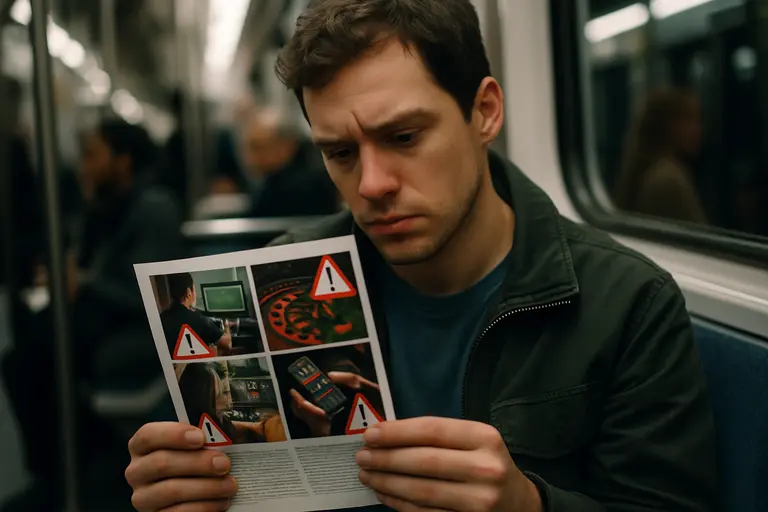
Some red flags are easy to miss because they arrive wearing polite clothes. A platform may use market language, clean charts, and modern app design while still failing to give users clear controls. Responsible users should look for warning signs before putting money at risk.
Marketing That Minimizes Risk
Be cautious if marketing presents event contracts as easy income, smart certainty, or social proof. No uncertain outcome becomes safe because many people discuss it. A platform should not pressure users with urgency, vague claims, or emotional prompts after losses. In ordinary table games, a pit boss who keeps urging a tired player to raise stakes would be bad company. Digital nudges deserve the same suspicion.
Weak Help And Limit Tools
A platform should make help resources prominent. If support for gambling-related harm is missing, buried, or written in cold legal language, that is not good enough. NCPG’s call, as reflected in the research, included access to help resources such as the National Problem Gambling Helpline and 1-800-MY-RESET. The safer design choice is to place those resources where users can act on them quickly.
Cooling-off periods are also useful. A cooling-off period gives time for emotion to settle before more money is committed. It is no insult to the user. It is a fence at the cliff’s edge, and only a fool complains that the fence interferes with the view.
Prediction Market Protections For Safer Participation
prediction market protections should be judged by what they do for the person at risk, not by how impressive they sound in a policy paper. The best safeguards help users pause, understand, limit, verify, and seek help. The worst safeguards are decorative buttons placed where no one under stress will find them.
For casino-minded readers, the lesson is familiar. Do not confuse a new product category with a new human nature. Chasing, overconfidence, loss denial, and budget drift are old habits in fresh clothes. If a prediction market does not give clear information, strong limit tools, visible help access, and age controls, the cautious choice is to step back.
The NCPG’s September 22, 2026 call did not say consumers are helpless. It said risk is real and protections should match that reality. That is sound advice. A person can enjoy games or market-style products only if money, time, and mental health remain under control. If they do not, the right move is not another trade. It is a break, a limit, or help from a qualified support resource.
Leave a Reply