
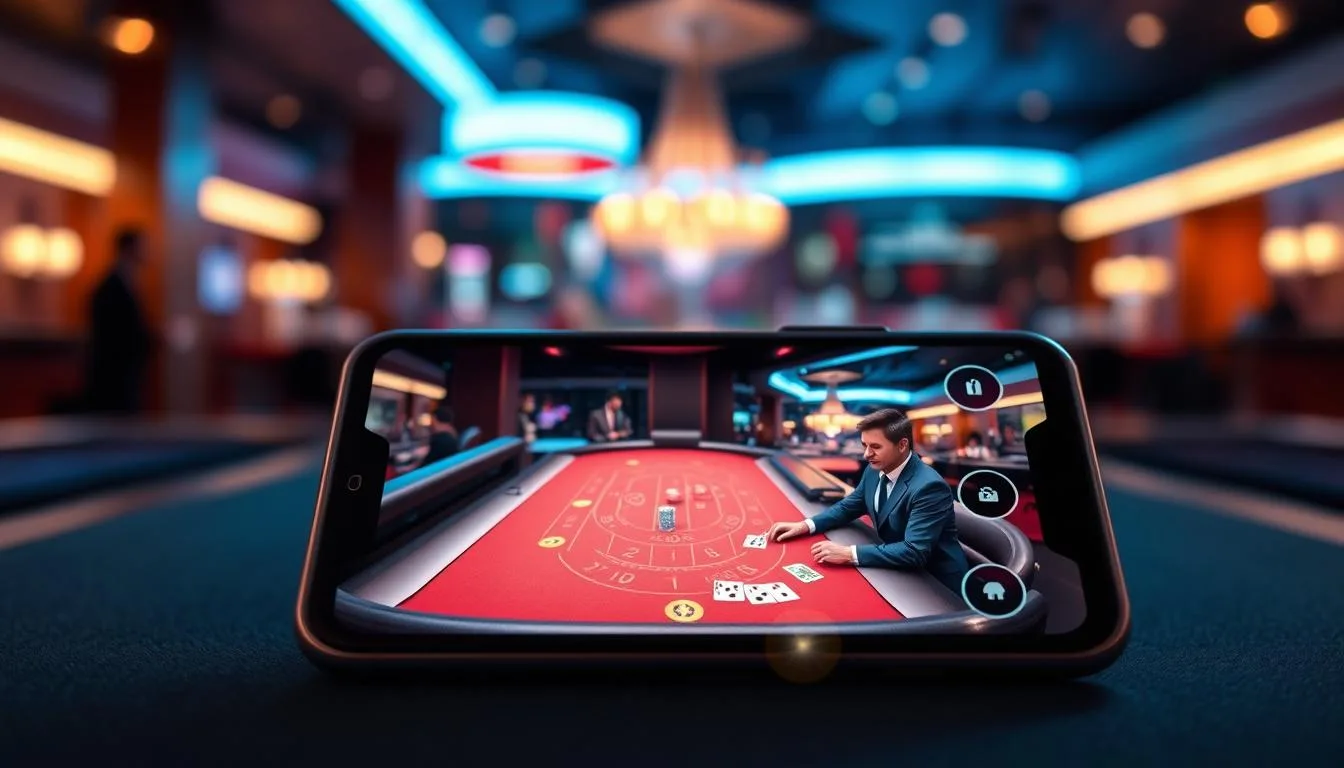
Let’s talk about the elephant in the room—or the croupier on your screen. Many think playing live dealer blackjack during lunch is easy. But, it’s not. Live dealer games can use a lot of data.
Streaming in high definition can use over 100MB per hour. Sometimes, it can even use 300MB if the connection is strong.
Imagine playing roulette and not knowing your data plan is crying. Slot machines use only 10-50MB per hour. This shows a big difference.
Mobile gambling is getting better, but it costs a lot—our data. The question isn’t if you can stream. It’s if your data plan can keep up while you play.
Video Quality Settings: Balancing Clarity with Data Usage on Mobile Devices
Imagine you’re deep into a mobile casino streaming session. The dealer flips a card, and the resolution is so crisp that you can almost feel the texture of the felt. It’s a feast for the eyes, right? But hold on—what’s that? Your data usage is skyrocketing faster than a high-stakes poker game. The challenge of maintaining stunning visuals while managing data consumption is a tightrope walk every mobile gamer must navigate.
Many casino apps come with hidden gems—settings that allow you to adjust graphics quality. These settings can significantly impact your data usage, yet many players overlook them. By lowering the graphics quality, you can instantly cut down on data consumption. It’s like switching from a lavish buffet to a sensible salad; you can enjoy the meal without overindulging.
Both Android and iOS offer features like Data Saver Mode and Low Data Mode. These aren’t just nifty options; they’re essential tools in your gaming arsenal. They limit streaming quality and help prevent background apps from refreshing unnecessarily. By engaging these modes, you can save a significant chunk of your data while enjoying your favorite games.
Here’s the kicker: reducing your video quality from 1080p to 720p can save you between 40-50% of your data. And don’t worry—your six-inch screen won’t revolt against this change. The visuals remain perfectly watchable, allowing you to focus on the game without the anxiety of a rapidly depleting data counter.
To help you understand the impact of various video quality settings, take a look at the table below:
| Video Quality | Resolution | Data Usage (per hour) | Visual Clarity |
|---|---|---|---|
| 1080p | 1920 x 1080 | 3 GB | Excellent |
| 720p | 1280 x 720 | 1.5 GB | Very Good |
| 480p | 854 x 480 | 0.7 GB | Good |
| 360p | 640 x 360 | 0.3 GB | Fair |
As you can see, making informed choices about your video quality settings can have a profound impact on your data usage. For more insights on data consumption while streaming, check out this informative article on how much data streaming uses.
In conclusion, balancing clarity with data usage doesn’t have to be a daunting task. With a few adjustments to your video quality settings, you can enjoy a seamless mobile casino experience without the fear of running out of data. So, take control of your gaming experience and make those settings work for you!
Bandwidth Management: Optimizing Internet Speed for Live Casino Streaming
Bandwidth management is like the backstage crew in a live show—essential but often overlooked. In the thrilling world of live casino gaming, the quality of your video stream hinges on the strength of your internet connection. It’s a delicate dance where every pixel matters, and weak signals can turn your exhilarating gaming experience into a frustrating slideshow.
Imagine this: you’re all set for a night of blackjack, but your connection is acting like a moody diva. A weak signal doesn’t just cause buffering; it also leads to repeated download attempts. Every time your connection stutters, your casino app doesn’t just shrug it off. No, it retries. And retries. This results in a cascade of data consumption that can leave your data plan gasping for breath.
Here’s the kicker: faster internet can actually consume less data. It sounds counterintuitive, right? But think of it this way: a stable connection finishes what it starts without the wasteful retry loop. On the other hand, a fluctuating signal can turn your casino app into a data vampire, draining your resources with every failed handshake and interrupted video chunk.
So, how do you ensure a smooth gaming experience? It starts with understanding your network. Here’s a handy table that outlines the impact of different network types on your live casino video quality:
| Network Type | Speed (Mbps) | Data Consumption (GB/hour) | Stability |
|---|---|---|---|
| 3G | Up to 3 | 2.5 | Low |
| 4G | Up to 100 | 1.5 | Moderate |
| 5G | Up to 1000 | 1.0 | High |
As you can see, while 5G offers impressive speeds, its true value lies in consistency. A stable connection means fewer retries and a better overall experience. But beware of those pesky dead zones in your apartment! They can create hidden data vampires that gnaw away at your precious bandwidth.
And let’s not forget about that “helpful” WiFi Assist feature on iPhones. It might be secretly switching you to cellular mid-stream, leading to unexpected data consumption spikes. Keep an eye on your settings, and you might just find a way to optimize your connection.
In conclusion, the goal is clear: aim for a stable, modest-speed connection that completes its tasks without the frustrating retry loop. Your live casino video quality depends on it!
Camera Angles: Utilizing Multiple Views for Better Mobile Gaming Experience
In mobile gaming, camera angles can be either heroes or villains. Imagine you’re in a live dealer casino game. The camera zooms in on the roulette ball, making you feel excited. But, this thrill comes with a price.
Live dealer casino games use a lot of data. Streaming video can use over 100MB per hour. Sometimes, it can use even more as the quality adjusts to your internet speed. More camera angles mean more data needed. It’s like a visual feast, but your phone might not handle it.

Multiple camera angles can make games more exciting. They offer different views that make the action feel real. But, they can also cause problems. Imagine playing blackjack and your phone struggles to handle three videos at once. It’s a recipe for disaster!
So, what’s the best choice? Choosing one camera angle is smart. It saves your data and keeps your phone cool. Your phone’s GPU will appreciate not working too hard.
The secret to great mobile gaming is finding the right balance. Choose the right number of views for your device. This way, you can have a fun experience without hurting your phone’s performance.
Audio Quality: Enhancing Sound for Immersive Mobile Live Casino Play
Audio quality is key in mobile live casino gaming, just like video clarity. The sounds of chips clinking and the dealer’s voice are essential. Audio is a critical part of the gaming experience, making it more immersive.
Many players don’t know that audio settings can impact mobile data usage. Streaming audio needs extra bandwidth, from 64 to 320 kbps. This can be a big data user, affecting your gameplay if not managed well.
- Stereo Sound: Offers a rich, immersive experience, perfect for capturing the nuances of gameplay.
- Mono Sound: A more basic option that uses less bandwidth, but conveys essential game information.
- Voice-Only Audio: This option can reduce total stream bandwidth by 15-20% without sacrificing critical game details. Why listen to the background jazz when you can hear the dealer’s instructions clearly?
Disabling background music is a smart move for those looking to conserve data. This way, you can use more bandwidth for a stable connection, improving your gaming experience. The dealer’s voice is key, not the background sounds.
In summary, optimizing your audio settings is as important as adjusting your video quality. By choosing wisely, you can have a smoother, more engaging experience. If you’re curious about how these factors influence the market, check out this detailed report on live casino trends.
Lag Reduction: Minimizing Delay Between Action and Display on Mobile
Lag in mobile gaming can be frustrating. You might place a bet, only to wait for what feels like forever. This delay can ruin the fun. But, there are ways to improve your mobile connection quality and cut down on lag.
Game booster apps are a great start. They can make your connection faster by optimizing DNS and prioritizing traffic. Think of them as your tech support team, fighting latency for you. For example, using Google or Cloudflare DNS can cut down latency by 10-20 milliseconds. That’s huge for live casino games.
Why does 10-20 milliseconds matter? In a fast-paced game like blackjack, it can make a big difference. A small delay can turn a confident bet into doubt. By reducing ping to 70ms, your game feels more real-time and engaging.
There’s more to it. Traffic prioritization ensures your app gets the bandwidth it needs. This means you won’t get interrupted by emails or social media. Your live dealer game gets the attention it deserves.
Lastly, connection stabilization is vital. You don’t want your WiFi to drop out mid-game. A stable connection lets you focus on your strategy, not your signal.

In conclusion, lag reduction is key for a smooth live casino experience. By optimizing your mobile connection, you can reduce delays and enjoy your games more. So, get ready to play like a pro with these tips!
Data Usage Control: Managing Mobile Data Consumption During Live Casino Sessions
Managing mobile data during live casino sessions is like a high-stakes game. It’s exciting to play with live dealers, but data overage charges are a worry. How can you control your data while enjoying mobile casino streaming?
Android and iOS have tools to track app data usage. These tools are key. They help you see which apps use the most data. This is important because some apps use a lot of data, even when you’re not using them.
Looking at your data usage stats can change your habits. You might think twice about playing data-heavy games. Seeing “4.7GB this month” can make you more mindful of your data use.
Setting up data usage alerts is a game-changer. These alerts keep you informed and prevent surprises. If your data is rising, you can switch to more efficient games or limit your streaming.
So, check your mobile settings and look for data usage stats. Set up alerts and watch out for apps that use data even when closed. Your wallet will appreciate it, and you’ll enjoy live casino games without worrying about data limits.
Quality Adaptation: Automatic vs Manual Video Quality Settings
In the world of mobile gaming, choosing between automatic and manual video quality settings is like a gamble. Automatic settings adjust video quality based on your internet speed. It’s like having a friend who always refills your drink, but it might not always be what you want.
Imagine you’re on a train, moving fast, and your internet keeps changing. Automatic settings are great here, keeping your game smooth. But if you’re at home, you might want to control the quality yourself. This way, you can avoid using too much data.
Some casino apps have a “Low Graphics Casino Mode.” It’s a smart choice that saves data without making you adjust settings yourself. It’s like a special preset that’s good for your data plan but lets you enjoy games too.
Here’s a quick comparison of the two settings:
| Feature | Automatic Settings | Manual Settings |
|---|---|---|
| Bandwidth Adaptation | Yes, adjusts based on connection | No, fixed quality |
| User Control | Limited | Full control over quality |
| Data Consumption | Can exceed 300MB/session | Can be managed effectively |
| Best Use Case | Fluctuating connections | Stable environments |
Choosing between automatic and manual video quality settings in mobile live casinos depends on what you like. Do you want technology to adjust things for you, or do you like to control it? Knowing your options can make your gaming better and help you avoid surprise data costs.
Network Switching: Seamlessly Transitioning Between WiFi and Mobile Data
In mobile gaming, knowing how to switch networks is key. Imagine playing live poker and your WiFi drops. Your device then switches to cellular, keeping the game going. But, this switch can cost you if you’re not careful.
Apple’s WiFi Assist is handy but can be a problem. It kicks in when your WiFi signal weakens. It seems great for uninterrupted play, but it can also eat up your data plan.
For gamers, the best approach is to use WiFi for gaming. Only switch to cellular when you must. This way, you save data and keep your mobile gaming performance top-notch. By controlling when you use mobile data, you avoid surprise charges.
Here’s a quick breakdown of the pros and cons of network switching:
| Feature | Pros | Cons |
|---|---|---|
| WiFi Assist | Seamless connectivity, uninterrupted gameplay | Potential data overages, loss of control |
| Manual Switching | Full control over data usage, strategic management | Requires attention, possible interruptions |
To turn off WiFi Assist on iOS, go to Settings > Cellular > WiFi Assist and flip the switch. On Android, go to Settings > Network & Internet > Mobile Network and make sure auto-switch is off. This tweak can prevent unexpected data use.
Getting the hang of network switching is vital for top mobile gaming. Use WiFi for downloads and updates, and save your cellular data for playing. It’s all about smart gaming and avoiding extra costs.
Buffer Management: Preventing Interruptions During Critical Gaming Moments
Imagine you’re in the middle of a live dealer game, with high stakes. Just as the roulette ball lands, your stream freezes. Buffer management is key to keeping your mobile connection stable during these moments. A good buffer can make all the difference between smooth gameplay and frustrating freezes.
Clearing your app’s cache too often can cause it to reload game assets. Instead, aim for a balance. Clear your cache every few weeks or when your storage is almost full. This keeps your app running smoothly without wasting time on unnecessary reloads. Preloading game assets on WiFi before using cellular can also help, reducing buffering during key moments.
Having a stable network is essential for a good casino stream. A steady 10Mbps connection often works better than a 50Mbps one that keeps changing. Buffer strategies work best when the network is stable. This ensures a smooth gaming experience. It’s better to have smooth play at moderate quality than a stuttering high-definition stream.
Take the time to adjust your device settings. A few changes can make a big difference in your mobile gaming. With the right buffer management, you can enjoy uninterrupted play. This lets you focus on what really matters—winning.
Leave a Reply