
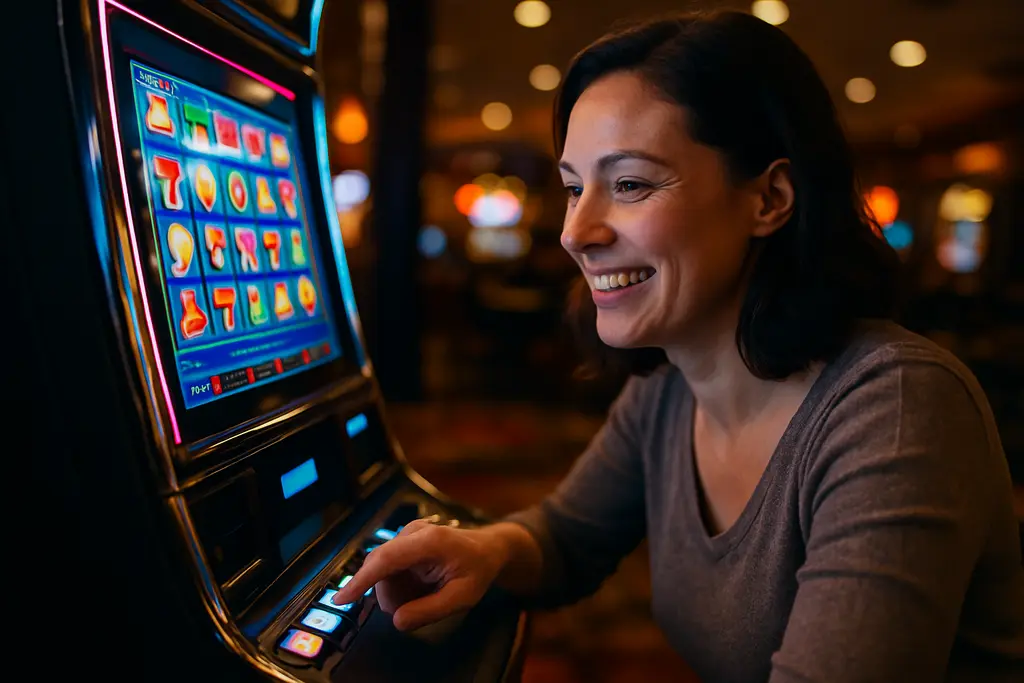
Michigan iGaming Slots are a useful lens for reading online casino growth in the state, but the data needs a careful touch. Michigan does not publish an official online casino split by game type, so any claim about slots driving most growth is an informed reading rather than a regulator-confirmed category breakdown. That matters for mobile players because a strong market can hide weak personal habits: longer sessions, faster repeat play, and less attention to limits.
The supported picture is still meaningful. Michigan online casino revenue has been large and growing, and industry reporting continues to describe slots as the most popular online casino games, with many operators offering hundreds of titles and some listing more than 1,000. The safer interpretation is not that players should play more. It is that category design, game variety, and mobile app placement deserve closer scrutiny.
Michigan iGaming Slots And Category Momentum
Michigan iGaming Slots Need A Revenue Caveat
The strongest hard number in the recent record is Michigan’s December 2025 online casino performance. Gross iGaming revenue reached $315.8 million for that month, which was reported as the highest monthly iGaming total to that date by the Michigan Gaming Control Board. That figure covers online casino games as a group, not slots alone.
That distinction is not minor. Slots may be the most visible part of the app lobby, and they are often the broadest catalog by title count, but Michigan’s public reporting does not confirm the exact share of online casino revenue by slots, live dealer, table games, or poker. A safer reading of Michigan iGaming Slots growth is that slots likely sit near the center of the product mix, while the precise share remains uncertain.
Why Category Mix Is Still Inferred
There is a second reason to avoid overclaiming. A revenue total can rise because more people are playing, because existing players are playing more, because game libraries are expanding, because promotional mechanics are changing, or because higher-denomination play is shifting online. Public data does not isolate those causes at the slot subcategory level.
Still, several signals point in the same direction. Reports cited in the research notes say online casinos in Michigan generated $3.09 billion in gross iGaming receipts in 2025, up about 26.5% over 2024. They also state that revenue crossed $300 million monthly for five straight months from March through July 2026, with July 2026 at $302.8 million, up 20.9% from July 2025. Those figures suggest a mature online casino market, even if the slot share is not officially broken out.
For readers comparing category signals across mobile casino coverage, this site’s related analysis of online casino revenue and category signals is a useful companion. The same principle applies here: category growth should be read as a market signal, not as a reason to stretch a bankroll.
Slot Mechanics That Appear To Hold Attention
Hold-And-Spin And Persistent State Play
One trend supported by the research notes is the durability of hold-and-spin and persistent state mechanics. These features have been popular since around late 2018 or 2019. The basic idea is simple: a player may collect symbols, meters, or rewards across several spins rather than treating each spin as a fully isolated visual event.
From a design standpoint, that can make a short session feel unfinished. A meter that is nearly full, or a bonus display that suggests progress, can create pressure to keep tapping. That is not proof of harm by itself, but it is a clear reason to use session timers and loss limits before starting. If a feature makes leaving feel harder, treat that as a safety signal.
Persistent features also complicate how players judge value. A game may feel more engaging without changing the underlying risk of losing money. Players should not assume that visible progress means improved odds. Unless a paytable or official game information screen says otherwise, progress-style visuals should be treated as entertainment design, not as a financial indicator.
Megaways, Classics, And Returning Titles
Recent title rankings in the research notes show why game categories are not just broad labels. In June 2026, Hypernova Megaways from ReelPlay held the top position in Michigan on bet365’s online slot performance list, while 88 Fortunes moved from No. 29 in May to No. 2 in June. Huff N’ Lots of Puff also moved into the top 10. In July 2026, Oink Oink Oink: Pharaohs from Playtech debuted at No. 1 in Michigan on bet365’s U.S. slot rankings, while Hypernova Megaways moved to No. 2.
Those ranking shifts suggest that both mechanics-led games and familiar brands can gain attention. Megaways-style games appeal through changing reel structures. Long-running titles appeal through recognition. Newer branded releases can also rise quickly when placed prominently in app lobbies.
The player-protection angle is direct. Familiarity is not the same as control. A known title may feel safer simply because a player has seen it before. A new title may feel worth testing because it appears near the top of an app. Neither condition changes the need to check bet size, paytable information, and session length.
Mobile App Signals For Safer Slot Selection

Session Length And Interface Friction
Mobile slots are built for quick access. That helps usability, but it also reduces natural stopping points. A desktop player might step away after closing a browser. A phone player can reopen an app in seconds. For live casino players and slot players alike, the device changes behavior.
I advise treating friction as a protection tool. Before starting, decide how long the session should last and how much can be lost without affecting bills, savings, or other obligations. Then use the operator’s limit tools where available. If the app makes it hard to find limits, transaction history, or responsible gambling settings, that is a trust concern.
Mobile casino design should be evaluated alongside the broader rules that shape online casino play, since licensing standards, age restrictions, payment controls, geolocation, and responsible-gambling requirements can affect how an app operates from one jurisdiction to another
Game lobbies deserve the same scrutiny. If a casino app heavily promotes trending slots, new releases, or persistent-progress games, players should slow down before choosing. A title that is easy to find is not automatically a better fit for a smaller bankroll or a short break.
Bankroll Checks Before Bonus Checks
Bonus terms are another pressure point. The research notes do not provide official bonus values, wagering rules, or operator-specific offers, so none should be assumed here. The safer method is to ignore the headline value until the requirements are clear. Check wagering, eligible games, contribution rates, expiration dates, maximum bet rules, and withdrawal conditions.
Slots often contribute differently to promotions than table games or live dealer games, but the exact terms depend on the operator and offer. If those terms are not easy to read on a phone, do not accept the bonus until they are clear. A confusing offer can lead to longer play than intended.
- Set a fixed session budget: Choose an amount before opening the app, not after a few spins.
- Use time limits: Persistent state games can make stopping feel less natural.
- Read the game information screen: Paytables and feature rules matter more than lobby placement.
- Keep deposits separate from entertainment goals: Do not chase a bonus requirement with money needed elsewhere.
- Pause after rapid losses: A short break can prevent reactive play on mobile.
For those interested in broader casino insights, GClubGod offers content within the same network. Maintain a safety-first approach, verifying terms, adhering to regulations, and treating entertainment expenses with caution.
Michigan iGaming Slots Category Growth Signals
The clearest category signal is that online casino activity in Michigan stayed strong through 2025 and into 2026, while slots remained the most visible and widely supplied game category. The clearest limitation is that public data does not provide a regulator-issued slot-only revenue split for online casinos.
For Michigan iGaming Slots, the practical takeaway is measured rather than promotional. Hold-and-spin mechanics, persistent progress features, Megaways formats, legacy titles, and fast-rising new releases all appear to support engagement. But engagement is not the same as value for a player. A well-designed mobile slot can still be a poor fit if the minimum bet is too high, the feature cycle encourages longer play, or the bonus rules are unclear.
There is also a useful contrast with retail casino data in the research notes. Detroit land-based casinos generated $1.28 billion in 2025 from slots, table games, and retail sports, with slots contributing $1.02 billion, or about 79.5% of that total. Retail figures do not prove the same share online, but they show how central slots can be within casino economics. At the same time, Detroit retail slots and table games revenue fell 5.4% year over year in December 2025, according to the research notes, while online casino figures were much stronger.
Tax reporting adds one more guardrail. Online casinos account for over 95% of Michigan’s lifetime online gambling tax revenue, according to PlayMichigan tax analysis. That does not isolate slots, but it reinforces how large the online casino side has become compared with online sports betting taxes.
The best response is not to chase the category. It is to use the category data as a warning that apps are very good at keeping attention. Choose lower-stress games, keep sessions short, avoid unclear offers, and stop when the planned budget or time limit is reached. Growth in Michigan’s online casino market may be real, but player protection remains the more useful metric at the phone level.
Leave a Reply