
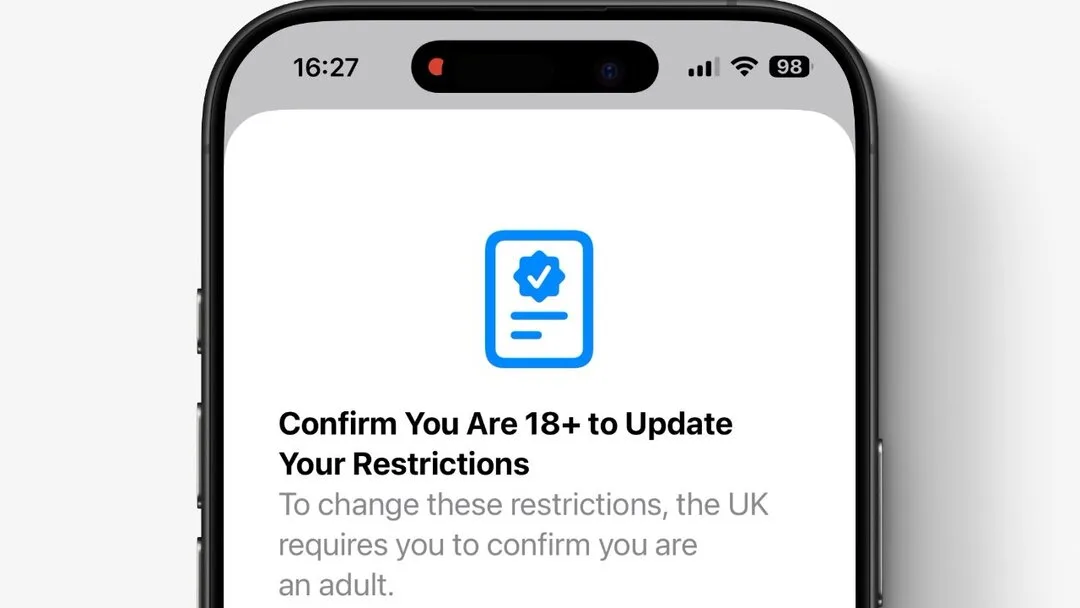
iPhone casino age verification has moved from a technical App Store issue into a much bigger question about who is responsible for keeping minors away from casino-style mobile experiences. A September 2026 court order in Brazil is putting that responsibility more directly on Apple, and the implications could reach well beyond one roulette app.
For iPhone users, the important distinction is between an app carrying an 18+ label and an app actually verifying whether the person downloading or spending money inside it is an adult. That difference already matters to players discussing mobile casinos through an online slot player community, because age gates, payments, licensing, and App Store availability increasingly shape which casino-style products can reach an iPhone.
Brazil Put Apple’s Age Controls Under Direct Pressure
On September 22, 2026, the São Paulo Court of Justice granted an emergency injunction involving Casino Roulette: Roulettist, a casino-style app rated for adults.
The order gave Apple five days to prevent new downloads by users registered as minors and require age verification before purchases of virtual chips with real money. It also addressed future apps with equivalent casino-style mechanics and established a daily R$100,000 penalty for noncompliance, as detailed in coverage of the Brazil casino app ruling.
The distinction matters. The order is an interim court measure, not a final ruling that Apple is broadly liable for every casino-style app distributed through the App Store.
Still, its practical message is hard to miss. An age rating displayed on an App Store page may not satisfy courts or regulators if younger users can still access the product and make purchases without meaningful verification.
That changes the argument from content labeling to access control.
Why Casino-Style Apps Create a Difficult Gray Area
Traditional real-money casino apps are easier to classify. If an app accepts wagers involving real money and pays real-money winnings, gambling regulations, licensing rules, geolocation requirements, and age restrictions generally come into play.
Social casino apps can be harder to categorize.
A game may simulate roulette, slots, blackjack, or baccarat without allowing the player to withdraw chips for real cash. Yet the user may still be able to buy virtual currency with real money and continue playing casino-style games.
That distinction may matter legally, but it can look much smaller on an iPhone screen.
For a teenager, the experience can include familiar casino mechanics: chips, spinning wheels, card tables, repeated wagers, virtual balances, and opportunities to purchase additional currency. Casino mechanics do not disappear simply because the chips cannot be cashed out.
That is why the Brazil dispute deserves attention outside Brazil. Courts and regulators may increasingly focus on what an app actually asks users to do rather than relying entirely on how developers categorize it.
Apple Already Treats Real-Money Gambling Differently
Apple’s existing rules make clear that real-money gambling is one of the most tightly controlled areas of the App Store.
Under its App Store gambling requirements, apps offering real-money gaming such as casino games, sports betting, poker, and horse racing must have the necessary licences and permissions where they operate. They must also be geographically restricted to approved locations and distributed for free.
Apple additionally prohibits developers from using in-app purchases to sell credits or currency used with real-money gambling.
Those rules create a relatively clear framework for regulated casino apps. The harder problem involves casino-style entertainment sitting outside conventional real-money gambling definitions.
Players trying to judge mobile casino products should understand that an App Store listing alone is not proof that two apps operate under the same regulatory model. A licensed real-money casino and a social roulette game may both display casino imagery, yet their payment systems, legal obligations, player protections, and withdrawal mechanics can be completely different.
Here is the practical distinction:
| Feature | Licensed Real-Money Casino App | Social Casino-Style App |
|---|---|---|
| Real-money wagering | Yes | Typically no direct cash wagering |
| Cash withdrawals | Usually available for winnings | Usually unavailable |
| Gambling licence | Required where offered | Depends on product and jurisdiction |
| Geolocation | Commonly required | May differ by app |
| Virtual currency purchases | Subject to gambling/payment rules | Common feature |
| Age controls | Gambling-age restrictions apply | Ratings and verification can vary |
| Main regulatory question | Is gambling properly licensed? | Do casino mechanics require stronger controls? |
The table shows why treating every casino-looking iPhone app as the same product creates confusion.
iPhone Casino Age Verification Could Become More Active
The most important question is what comes after the Brazil case.
Apple has already been expanding age-assurance tools and age-rating systems across multiple markets. A court demanding stronger verification around casino-style purchases raises the possibility that passive age ratings could gradually be supplemented by more active checks where local law requires them.
That would represent a meaningful product shift.
Instead of simply showing that an app is intended for adults, an App Store or individual app could need stronger evidence that an adult is actually behind the account before certain downloads or purchases are allowed.
The exact system could vary by country. Age assurance can involve account data, parental controls, identity processes, payment information, or privacy-preserving methods that confirm an age range without handing every developer a user’s full identity.
There is an obvious tension. Stronger verification can protect younger users, but poorly designed systems can also collect more personal information than necessary.
That makes privacy part of the same debate.
A well-designed age-control system needs to answer two questions at once: can the platform reliably prevent underage access, and can it do so without creating unnecessary identity or data-security risks?
Players Should Look Beyond the App Store Badge
For adult casino players, the ruling is also a reminder that downloading an app from Apple’s marketplace should not replace basic due diligence.
Before using any casino or casino-style iOS product, players should identify whether the app offers real-money gambling, simulated gambling, or virtual-currency play. They should also understand who operates it, what jurisdiction applies, whether withdrawals are possible, and what happens to purchased virtual currency.
That process connects directly with broader safer gambling tools because age gates are only one layer of player protection. Deposit limits, account controls, time-outs, payment transparency, and self-exclusion matter once an eligible adult begins using a gambling product.
Parents face a different version of the same problem. An app described as simulated gambling may not initially sound like a financial risk, but in-app purchases can turn repeated play into real spending even when no cash prize exists.
The key principle is access is not approval. An app being downloadable does not prove that every feature is appropriate for every user or that its regulatory status matches a conventional licensed casino.
The Bigger Test Is Whether App Stores Become Gatekeepers
The Brazil order matters because it pushes the debate one level above the casino developer.
If courts increasingly expect marketplace operators to prevent underage access before downloads or purchases occur, Apple and other app-store operators could become more active gambling gatekeepers rather than simply distributors enforcing developer rules.
That would affect developers too. Stronger verification could mean additional onboarding requirements, more regional compliance work, tighter review of virtual-currency systems, and greater scrutiny of apps that imitate casino play without fitting traditional gambling categories.
For players, the direction is easier to understand. Age controls are becoming product controls. They can affect whether an app appears, who can download it, how purchases work, and which casino-style mechanics developers are willing to offer.
The Brazil injunction does not establish one worldwide standard, and the broader case remains unresolved. But iPhone casino age verification is now part of a larger argument over whether an 18+ label is sufficient when casino mechanics and real-money purchases meet inside the same app.
That is the pressure point worth following. The next major change to iPhone gambling may not be a new slot feature or casino bonus. It may be the moment before the app opens, when Apple has to decide whether the person tapping “Get” is actually old enough to be there.
Leave a Reply