
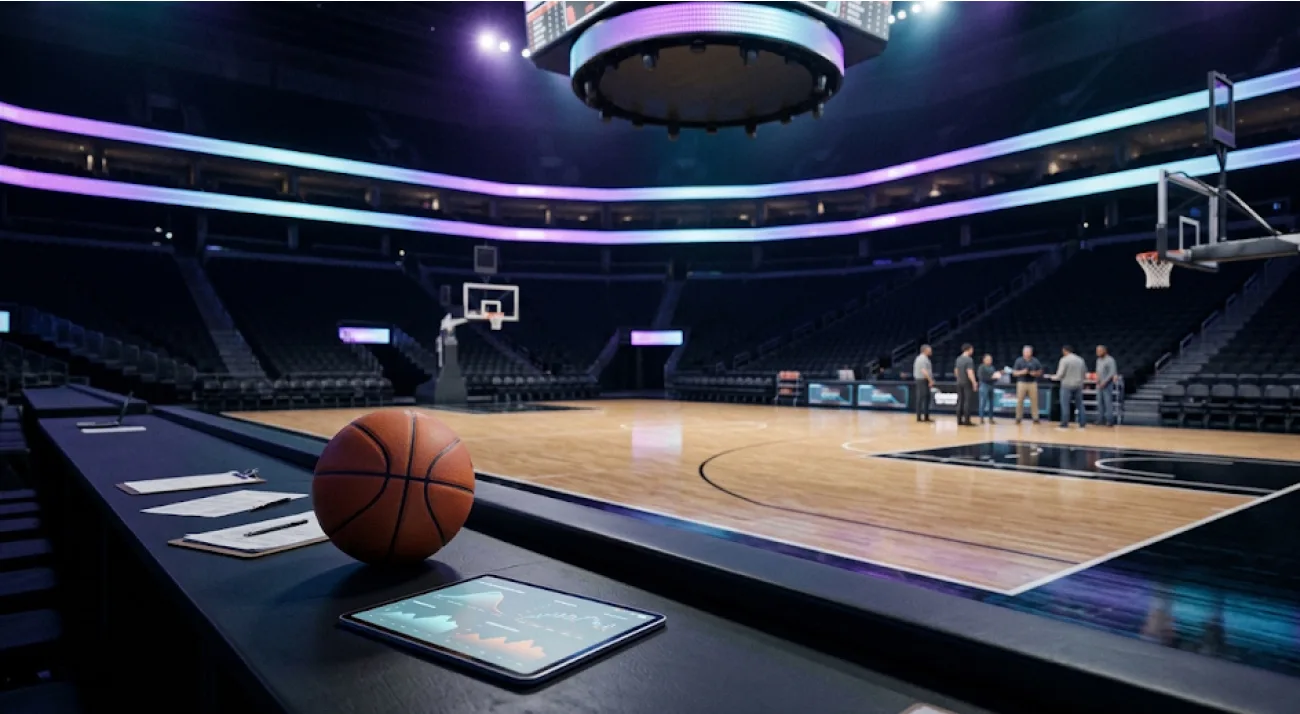
The National Basketball Association has taken a major step into the rapidly expanding U.S. prediction-market industry. On October 26, 2026, the NBA announced multiyear partnerships with Kalshi and Polymarket, naming the two platforms its preferred prediction-market exchanges.
The agreements represent a significant development for an industry that has attracted growing attention from professional sports leagues, financial regulators, traditional sportsbooks, and state gambling authorities.
Under the partnerships, Kalshi and Polymarket will receive access to official NBA data and certain marketing rights. The companies will also work with the league on measures intended to identify suspicious trading and protect the integrity of professional basketball.
The announcement comes at a complicated time. Prediction-market operators continue to defend their federal regulatory status while state authorities challenge whether sports event contracts should be treated as gambling.
For the NBA, the agreements create new commercial opportunities. For Kalshi and Polymarket, they provide a major endorsement from one of America’s most influential professional sports organizations.
But the partnerships do not resolve the legal disputes surrounding sports prediction markets.
What the NBA’s Kalshi and Polymarket Partnerships Include
The NBA’s October 26 announcement establishes a commercial and integrity framework for authorized basketball-related prediction markets.
Both companies have been designated Preferred Prediction Market Exchanges of the NBA, a status that gives them access to certain official league assets while requiring cooperation with the NBA on market integrity.
According to the league’s official announcement, the agreements include several important provisions:
- Official NBA data: Kalshi and Polymarket will receive data distributed by Sportradar, the league’s official data distribution partner, to operate and settle authorized NBA event contracts.
- Marketing and intellectual property rights: The platforms can use NBA intellectual property and participate in promotional activities across U.S. media channels.
- Restrictions on permitted markets: The NBA will establish limits on which types of basketball-related event contracts the platforms may offer.
- Insider-trading safeguards: League and team personnel are expressly prohibited from trading NBA event contracts.
- Information sharing: Both exchanges must cooperate with investigations and provide information concerning suspicious trading activity.
The league did not disclose the financial value of either agreement. It confirmed that the commercial partnerships cover multiple years.
Scott Kaufman-Ross, the NBA’s head of media distribution and partnerships, described protecting the integrity of basketball as the league’s central priority. The NBA’s position is that direct cooperation with prediction-market operators provides an opportunity to establish safeguards rather than leaving the platforms outside its existing integrity framework.
NBA and CFTC Sign Agreement to Protect Basketball Integrity
Alongside the commercial partnerships, the NBA signed a memorandum of understanding with the Commodity Futures Trading Commission.
The agreement, announced in Washington on October 26, establishes a framework for communication and information sharing concerning NBA-related prediction markets.
CFTC Chairman Michael S. Selig said the arrangement supports efforts to address insider trading, fraud, and other threats to market integrity.
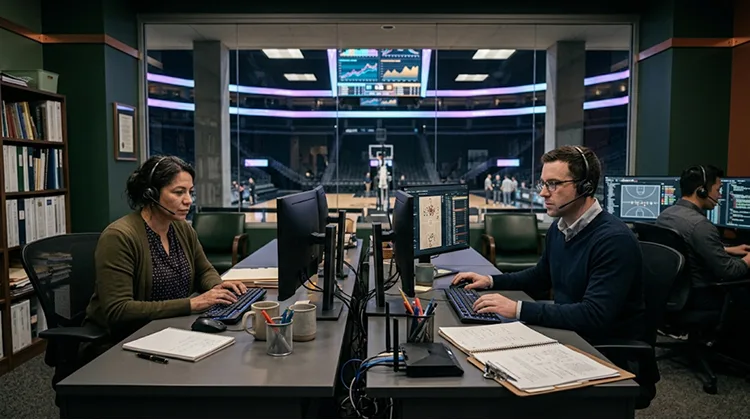
The NBA joins Major League Baseball and the National Hockey League in establishing similar information-sharing arrangements with the federal regulator.
The memorandum is significant because the CFTC oversees federally regulated derivatives markets, including certain event contracts offered through designated contract markets.
However, the agreement is not a federal law, a court ruling, or a blanket authorization for every sports-related contract. It also does not eliminate the authority disputes involving state gambling regulators.
Instead, the NBA-CFTC agreement creates a mechanism for cooperation as the legal and regulatory landscape continues to develop.
Why the NBA Is Restricting Certain Prediction Markets
One of the most important features of the new partnerships is the NBA’s ability to restrict the types of contracts offered on league events.
Not all sports-related markets present the same integrity concerns.
A contract tied to the winner of an NBA game may involve different risks from a contract based on an individual player’s performance, a referee’s decision, or an event that could be influenced by someone with inside knowledge.
The NBA has already taken steps to restrict certain wagering products through its traditional sportsbook partnerships. Its agreements with Kalshi and Polymarket extend that integrity-focused approach into prediction markets.
The restrictions are particularly relevant following high-profile gambling investigations involving professional basketball.
In 2024, former Toronto Raptors player Jontay Porter pleaded guilty to a federal conspiracy charge connected to a gambling scheme involving his performance in NBA games. The case demonstrated how player-specific wagering can create opportunities for manipulation.
The league’s newer prediction-market arrangements seek to reduce similar risks by limiting permissible contracts and requiring information sharing when unusual trading activity is detected.
These safeguards do not guarantee that manipulation or insider trading will never occur. Their effectiveness will depend on how consistently operators monitor activity, identify prohibited participants, and cooperate with investigations.
Kalshi and Polymarket Gain Access to Official NBA Data
Official data is a commercially important component of the partnerships.
The NBA’s authorized data distributor, Sportradar, will supply information used to operate and settle approved NBA-related contracts.
For prediction-market customers, official data can provide a clearer reference point for determining whether an event contract has settled correctly.
For operators, it can support consistent market settlement procedures and reduce disputes over unofficial or conflicting results.
Kalshi confirmed that its partnership will integrate official NBA data into authorized basketball markets and establish direct channels for reporting suspicious trading.
The company also highlighted its existing market-surveillance work with IC360 and its efforts to support consumer protection and athlete safety.
Polymarket likewise gains access to league branding and authorized data through its preferred-exchange relationship.
The agreements could help both platforms strengthen their position in the competitive U.S. sports prediction-market industry, although neither partnership guarantees future trading volume, profitability, or regulatory approval in every state.
DraftKings Expands Its NBA Agreement Into Prediction Markets
The NBA’s announcement was not limited to Kalshi and Polymarket.
The league also expanded its existing agreement with DraftKings to cover prediction markets and nationwide promotional activity.
DraftKings already has an established relationship with the NBA through traditional sports betting. The expanded arrangement brings its prediction-market activities into the league’s developing integrity framework.
The NBA said it expects to broaden similar arrangements with other existing sports betting partners and additional companies.
These agreements will include enhanced integrity requirements and restrictions aligned with the league’s latest sports wagering policies.
This development illustrates how the distinction between traditional sportsbooks and prediction-market operators is becoming increasingly important.
Companies that previously competed primarily through state-licensed sports betting products are now exploring federally regulated event contracts as an additional business opportunity.
For the NBA, working with both established sportsbooks and prediction-market exchanges may provide a more consistent approach to monitoring activity across different types of sports wagering products.
Why the Deals Are Controversial Despite NBA Approval
The NBA’s partnerships arrive while Kalshi and Polymarket face ongoing legal challenges concerning sports event contracts.
The central dispute involves whether these products should be regulated primarily as federally supervised derivatives or as gambling subject to state licensing requirements.
Prediction-market operators argue that qualifying event contracts fall under the Commodity Exchange Act and the CFTC’s jurisdiction.
State regulators, meanwhile, have argued that contracts tied to sporting outcomes can function like sports wagers and should therefore comply with state gambling laws.
These competing interpretations have produced litigation and enforcement actions across the country.
According to Associated Press reporting on October 26, more than a dozen states have challenged aspects of the prediction-market industry’s regulatory position.
The NBA’s decision to enter commercial agreements with Kalshi and Polymarket does not settle those cases.
A league can approve a commercial relationship without determining whether a product is legally available in a particular jurisdiction.
Likewise, a memorandum of understanding with the CFTC does not prevent courts from examining disputes over federal preemption, state gambling authority, or the legality of particular event contracts.
That distinction is essential for consumers and industry observers following the growth of prediction markets.
How Prediction Markets Differ From Traditional NBA Sports Betting
Although prediction markets and sportsbooks can both offer products tied to basketball outcomes, their structures and regulatory approaches differ.

| Feature | Prediction markets | Traditional sportsbooks |
|---|---|---|
| Product structure | Event contracts traded between market participants | Wagers accepted by a sportsbook |
| Pricing | Contract prices reflect trading activity and available liquidity | Odds are set and adjusted by the operator |
| Main regulatory framework | Federal commodities regulation for qualifying contracts, subject to ongoing disputes | State sports wagering laws and licensing |
| Availability | Depends on platform rules, product eligibility, and applicable legal restrictions | Available only in jurisdictions where the sportsbook is authorized |
| NBA relationship | New preferred-exchange agreements with Kalshi and Polymarket | Existing official sportsbook partnerships |
The distinction matters because a customer may encounter similar basketball-related products on platforms operating under different legal and regulatory frameworks.
Prediction-market exchanges generally match participants trading event contracts, while traditional sportsbooks accept wagers under state gaming licenses.
However, the practical experience can look similar when both products involve the outcome of an NBA game.
That overlap is one reason state regulators have challenged the classification of sports event contracts.
It also explains why professional leagues are seeking integrity protections that apply across both industries.
What the Partnerships Mean for NBA Fans
For basketball fans, the most immediate changes may involve branding, official statistics, and the types of markets available through participating platforms.
Kalshi and Polymarket will be able to use approved NBA intellectual property in connection with their authorized partnerships.
They will also have access to official league data that can support the settlement of eligible contracts.
At the same time, certain contracts may be unavailable because of the NBA’s restrictions.
Fans should not assume that every NBA-related event can be traded or that an official league partnership makes every contract legal in every state.
Consumers should also understand that prediction-market contracts involve financial risk. A contract can lose its entire purchase value depending on the outcome, and transaction costs can affect returns.
The NBA’s agreements focus heavily on integrity and information sharing, but they do not remove the financial risks associated with trading event contracts.
What Happens Next for NBA Prediction Markets?
Several developments will determine the longer-term impact of the October 26 announcement.
First, the NBA will need to implement and monitor its new restrictions with Kalshi, Polymarket, and other authorized operators.
Second, the league and CFTC will begin using their information-sharing framework to address potential integrity concerns.
Third, ongoing court cases and regulatory proceedings will continue to shape which sports event contracts may be offered in different jurisdictions.
Finally, additional sports betting and prediction-market companies may seek NBA partnerships as the industry develops.
The agreements also place the NBA among the major professional sports organizations willing to work directly with prediction-market operators.
Not every league has taken the same approach. The National Football League has expressed concerns about the regulatory treatment of sports prediction markets and has called for stronger protections involving integrity, insider trading, and consumers.
That difference suggests the industry has not yet reached a consensus on how sports event contracts should be governed.
Final Thoughts: A Major NBA Deal, but Regulatory Questions Remain
The NBA’s October 26, 2026, partnerships with Kalshi and Polymarket represent an important milestone for the U.S. prediction-market industry.
By designating both companies as preferred exchanges, granting access to official Sportradar data, and establishing restrictions on permissible markets, the league has moved from observing the sector to participating directly in its development.
The accompanying agreement with the CFTC adds a federal information-sharing component, while the expanded DraftKings partnership demonstrates that traditional sports betting companies are also entering the prediction-market business.
Yet the regulatory disputes remain unresolved.
State authorities continue to challenge the legality of certain sports event contracts, and the NBA’s commercial endorsement does not override state laws or pending court decisions.
For consumers, operators, and regulators, the central issue is whether prediction markets can expand while maintaining effective protections against manipulation, insider trading, and other risks.
The NBA has now committed to helping establish those safeguards. Whether the framework becomes a model for the wider sports industry will depend on its implementation and the outcome of continuing legal battles.
Leave a Reply